Golf equipment for children: the complete guide to making the right choice
Quick response
A golf equipment for children Choosing the right set of clubs depends on one criterion: the child's height, not their age. A set of 4 to 6 clubs is sufficient to start—woods or hybrids, one or two irons, a wedge, and a putter in a light bag. A well-equipped child progresses faster and enjoys the game more.
Choosing golf equipment for children is often the first decision a parent makes before putting their child through a real game. And it's also often where the first mistakes creep in—with the best intentions in the world.
A child with the wrong equipment doesn't always admit it. They force it. They tense up. Their swing is erratic, and they tire much more quickly. And above all, they enjoy it less. This is what we regularly observe at Golf du Belvédère: a child who arrives with unsuitable equipment takes much longer to find their feel for the game—and sometimes gives up before they've even really started.
However, choosing the right golf equipment for children is not complicated once you have the right guidance. This guide brings together everything you need to make a simple, logical, and lasting decision.
Table of Contents - Golf Equipment for Children
Why equipment determines your child's beginnings in golf
A child doesn't always clearly state that their equipment isn't suitable. However, their swing immediately reveals it: they compensate, they force it, they lose their balance. And little by little, they associate golf with something difficult rather than something enjoyable.
Good junior equipment offers several immediate benefits:
- a more natural posture from the very first strokes; ;
- a smoother and more reproducible swing; ;
- less fatigue on the practice range or the course; ;
- more confidence from the very first sessions; ;
- greater desire to come back and play.
Conversely, a club that's too long worsens posture and creates harmful compensatory movements. A club that's too heavy will exhaust the child before the end of the nine holes. An improperly sized bag makes every step on the course uncomfortable. The right equipment isn't what impresses. It's what truly makes the game easier.
The height/age chart: the only truly reliable criterion
This is the central point for any choice of junior clubs: Size trumps age. Two children of the same age can have very different body shapes, and therefore radically different needs.
Here are the conversion guidelines used by the main junior equipment brands (Inesis, US Kids Golf, MKids, Ping ProdiG):
| Child's size | Approximate age | Typical kit contents |
|---|---|---|
| Less than 110 cm | 2-4 years | Lightweight bag + 1 iron + putter |
| 110 to 130 cm | 5-7 years old | Bag + hybrid + 9/PW iron + putter |
| 130 to 145 cm | 8-10 years old | Bag + driver + 7/8 iron + 9/PW iron + putter |
| 145 to 160 cm | 11-13 years old | Bag + driver + hybrid + 2 irons + putter |
How to measure simply: Ask your child to stand with their arms at their sides. Place the club vertically in front of him. The ideal length should reach between her navel and the bottom of her chest.
A kit typically covers a growth period of 15 to 20 cm — which translates to approximately 18 to 24 months of practice before the equipment needs to be reassessed. There's no need to buy new clubs every 6 months.
Expert advice: If your child is between two sizes, choose the smaller one. A slightly shorter club is always easier to handle than one that is too long, which will worsen their posture from the very first strokes.
What basic kit is needed for a child starting out?
For a child starting out in golf, the equipment should remain simple, lightweight and consistent. An overfilled bag creates confusion and unnecessarily complicates the experience.
The really useful basic kit:
- a driver wood or a hybrid (for long-distance shots); ;
- one or two easy-to-play irons; ;
- a wedge (for playing around the green); ;
- a putter; ;
- a lightweight and easy-to-carry bag.
This minimalist format is more than enough to learn the basics and have fun without getting lost in too many options. A child progresses better with 4 good clubs than with 10 poorly suited ones.
Absolutely avoid at this stage: sets that are too heavy, bulky bags, overly technical purchases too early, and clubs chosen solely because they "will last longer".
To complete your selection, consult our guides:
Leading junior brands in 2026
The junior equipment market has become considerably more structured in recent years. A few specialist brands have established themselves as benchmarks, depending on your child's budget and level of commitment.
Inesis (Decathlon)
Inesis offers a color-coded kit system—yellow, green, red, blue—each corresponding to a specific size range. This is the most affordable option in terms of both budget and immediate availability, ideal for first-time gear or for trying out the sport before investing more.
US Kids Golf and MKids
US Kids Golf is probably the most internationally recognized brand for junior golf clubs, with very precise sizing by size. MKids offers excellent value for money with a range covering ages 2 to 15, available from most specialist retailers in France.
Ping ProdiG
This is the premium benchmark. Ping is the only major high-end brand to offer a complete selection of individual junior clubs—from driver to putter. The brand also offers free shaft extensions after a growth spurt, significantly prolonging the lifespan of the equipment.
TaylorMade Junior and Cobra King Jr
These ranges complement the offering for children already involved in regular practice, with technologies similar to those used in adult clubs but adapted to junior body types. To help guide your choice, the team at Belvédère Golf ProShop is available to guide you.
The 4 mistakes that hinder progress and cause you to lose money
Mistake #1: buying adult shortened clubs. On paper, it seems economical. In practice, an adult club is still an adult club: the head weight, shaft flexibility, and overall balance aren't designed for a child. The result is a restricted, unpleasant swing that can lead to bad habits that are difficult to correct later.
Mistake #2: buying too big "so that it will last". What you gain in perceived duration, you lose in learning quality. A club that is too large degrades posture, generates compensatory movements, and quickly discourages the child.
Mistake #3: wanting a bag that's too complete too soon. Too many clubs create confusion. A child needs simple reference points, not a tournament inventory. Four to six well-chosen clubs are far better than twelve, half of which will never be used.
Mistake #4: Neglecting overall comfort. The bag, the weight, the grip, the ease of transport… all of these influence the experience. A child who gets tired carrying their equipment associates golf with physical constraint — not with pleasure.
Budget: How much should you expect to pay for a junior kit?
Junior golf isn't necessarily an expensive sport if you consider the "useful cost" rather than the "gross cost." Here are some indicative price ranges for a complete set (clubs + bag):
| Profile | Indicative budget | Suitable brands |
|---|---|---|
| 2-7 years (reduced kit for 2-3 clubs) | 50 to 70 € | Inesis, Green's |
| 8-13 years old (set of 4-5 clubs) | 100 to 140 € | Inesis, MKids, US Kids |
| Regular practice / high-end | €200 and more | Ping ProdiG, TaylorMade Jr |
The key takeaway: the best purchase isn't necessarily the most expensive, it's the most suitable. A poor-quality, "cheap" kit can discourage a child after just a few sessions—which actually ends up being much more expensive in the long run.
New or used: how to choose?
Opt for something new if your child is starting to practice seriously, if you want a homogeneous and consistent set, or if you want to avoid the unpleasant surprises of worn-out equipment.
The opportunity may be relevant if your child grows very quickly, if you want to test before investing more, or if you find a recent junior pack in good condition.
In all cases, always check: the condition of the grips (supple and clean), the actual length of the clubs (refer to the size/age chart above), the overall weight, and the condition of the bag. A good deal is an opportunity. A bad deal is a false economy.
The simple plan to get off to a good start at Golf du Belvédère Annecy
Here are the 4 steps to put your child in the best possible conditions from the start:
- Choose the kit that fits your size — refer to the table above, not the age indicated on the box.
- Start with a supervised introductory session — The Belvedere Golf Academy offers a free introductory session every Sunday so that your child plays with good reference points from the start.
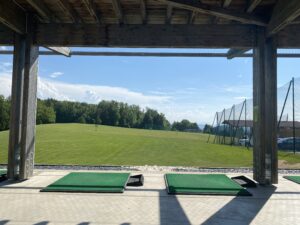
- Practice regularly on the driving range - THE Belvedere Golf practice, unique in the region, is ideal for building foundations in a fun and progressive environment.
- Reassess the equipment every 18 to 24 months — or after a significant change in size or level of play.
Expert advice: A child's progress in golf depends as much on the quality of their equipment as on the regularity of their practice. A good learning environment is often worth more than a top-of-the-line set. Discover the Belvedere golf school and all its formulas.
Conclusion: the right equipment, the first step towards the pleasure of playing
Choosing the right golf equipment for children isn't about miniaturizing adult gear. It's about creating the right conditions so your child can play more easily, gain confidence, and want to improve.
The golf It's a well-rounded sport that develops coordination, concentration, emotional management, and respect for the rules. To truly enjoy it, you need the right equipment from the start.
Remember: the number one criterion is always the child's height, not their age. A simple, lightweight, and well-designed kit is all you need to get started. And if you're still unsure, an introductory session with the instructors at Belvédère is often the best way to get all your questions answered in an hour.
What if the best investment wasn't a club, but a first session?
FAQ: Golf equipment for children
What constitutes good golf equipment for a beginner child?
A good golf set for a beginner child includes four to six clubs suited to their height: a wood or hybrid, one or two irons, a wedge, and a putter, all in a lightweight, easy-to-carry bag. The determining factor is the child's height, not their age. There's no need to aim for a full set before they've established a regular practice routine.
How do I choose the right size golf clubs for my child?
Junior club sizes are chosen according to the child's height, not their age. To measure simply: hold the club vertically in front of them, arms at their sides—the correct length should reach between the navel and the bottom of the chest. A set typically covers 15 to 20 cm of growth, or 18 to 24 months before reassessment.
At what age can one start playing golf with suitable equipment?
A child can start playing golf as early as 4 or 5 years old with lightweight junior equipment. Kits are available for children as young as 110 cm (2-4 years old). The most important thing is that the equipment is proportionate to their size. At Golf du Belvédère, young players are welcomed into dedicated academy sessions from their earliest years.
How many clubs should be in a child's golf set?
A beginner child needs a maximum of 4 to 6 clubs. Too many clubs create confusion and complicate learning. A smaller set allows for a better understanding of the basics, greater consistency, and faster progress without mental overload or unnecessary physical fatigue.
What are the best brands of junior golf clubs?
The leading brands for junior equipment are Inesis (Decathlon) for affordable options, US Kids Golf and MKids for excellent value, and Ping ProdiG for high-end equipment with free shaft extensions. TaylorMade Junior and Cobra King Jr complete the range for more advanced children.
Should you buy new or used children's golf equipment?
Buying new equipment is recommended for beginners, ensuring consistent and reliable gear. Second-hand equipment can be a good option if the set is recent, in good condition, and the right size for the child. Always check the condition of the grips, the actual length of the clubs, and the overall weight of the set before purchasing second-hand equipment.
Why not use adult clubs shortened for a child?
Shortened adult clubs are unsuitable for children: the head weight, shaft flexibility, and overall balance are not designed for their anatomy. They make the swing more difficult, create poor motor habits, and significantly reduce the enjoyment of the game. A junior set is always preferable, even an entry-level one.