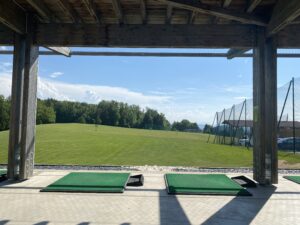
Friendly game formulas in golf: the complete guide
Friendly golf formats are rounds played without official rankings, designed for enjoyment rather than performance: Scramble, Four-Ball, Greensome, but also more original games like string races or free distribution of handicap strokes. They allow players of very different skill levels to share the same round, without pressure, varying the fun with each outing.
Expert advice: Always announce the chosen formula before heading out onto the first tee: a five-minute briefing avoids many disagreements on the greens.
Table of Contents - Friendly Golf Game Formulas: The Complete Guide
What is a friendly playing format in golf?
A friendly format differs from a competitive format in one key respect: it is not sanctioned by the French Golf Federation and does not count towards a handicap. It can therefore disregard certain strict rules to prioritize the pace of play, the atmosphere, and fairness between players of different skill levels. It includes familiar formats such as Scramble or Four Ball Best Ball, but also more playful variations, sometimes invented by the clubs themselves, which add a touch of strategy or humor to the game.
This type of format is particularly well-suited to a 9-hole course like the Belvédère: the rounds are shorter, allowing you to try several formats in the same season, or even play two different formats consecutively on a single round. Unlike an official competition, there's no obligation to play the full 18 holes: a group of friends can easily decide to play a Scramble on the first six holes, then finish with a 4-Ball format to change the pace.
Another often underestimated advantage is the freedom regarding stakes. A friendly round can easily be played with a small, symbolic bet (a round at the clubhouse, a few euros per lost hole) without changing the nature of the format. It is this flexibility that makes friendly rounds a fantastic way to introduce golf to friends and family who are hesitant to try a competitive tee time.
The Scramble, the number one formula among friends
If only one friendly format could be chosen, it would be the Scramble. Each player on the team (usually 2 to 4 players) hits their ball from the same tee. The team then selects the best position from among the balls played, and all players continue playing from that spot until the ball is in the hole.
The appeal of the Scramble lies in its mechanics: a missed shot is never penalized, since the team always restarts from the best available spot. This allows beginners to participate without fear of slowing down the game or negatively impacting the team score, while still giving more experienced players the opportunity to shine on crucial shots. It's also a format that naturally speeds up the pace of play, a significant advantage for a relaxed round at the end of the day or for a corporate event where time on the course is limited.
To ensure fairness in the Scramble, some clubs impose a local rule requiring a minimum number of balls per player to carry on the course (often 3 or 4 tee shots per person), to prevent one team member from carrying the entire load. For more information on roles among teammates and ball selection strategies, see our Complete guide to playing Scramble details the method step by step.
4 Ball and Greensome: varying the team fun
The 4 Balls better ball This format pits two teams of two players against each other. Each golfer plays their own ball from tee to hole, but only the best score of the two teammates counts for the hole. This format maintains an individual dimension (each player plays their own ball from start to finish) while mitigating the impact of a completely botched hole thanks to the safety net provided by the partner. It's a very popular format because it allows each player to attempt daring shots without jeopardizing the team.
The Greensome It works differently: both players on the team each hit a tee shot, then choose the better of the two balls to finish the hole, playing alternately, as in Foursomes. It's an excellent compromise between Scramble (very accessible) and Foursomes (more technical and demanding in terms of coordination) — ideal when the group wants a bit more strategy without getting into the rigidity of a competitive format.
A similar variant deserves mention: the Chapman. The two players tee off, then exchange balls for the second shot before choosing the better of the two and finishing the hole alternately. A little more technical than Greensome, it offers a very good balance between conviviality and strategy for friendly, slightly more structured games.
These formats cover most of the needs of a friendly team game. Our dedicated page for team game formats in golf compare their rules and level of difficulty in more detail.
| Formula | Players | Ideal for |
|---|---|---|
| Scramble | 2 to 4 | Beginners, heterogeneous groups |
| 4 Balls better ball | 2 against 2 | Experienced players, a desire for boldness |
| Greensome / Chapman | 2 against 2 | Coordination and strategy for two |
| Club game withdrawn | 2 or 2 against 2 | Spice up a match play |
| String race | Individual or team | Catching up with unlucky shots |
Friendly game formats for 100 % leisure golf to spice up the game
Beyond the classic team games, there exists a family of even more informal formats, often passed down from club to club or invented by the players themselves. Less well-known, they bring real originality to rounds among friends and allow you to rediscover a course you play regularly.
The free distribution of blows returned
Rather than applying their handicap strokes hole by hole according to the official difficulty index, each player can freely decide where to use them on the course, provided they announce their choice before playing the hole and never exceed two handicap strokes on any one hole. The winner is the player with the best Stableford score using this new system. This is ideal for players who consistently struggle on certain holes of their usual course and can thus "earn" extra strokes where they need them most.
The game of reverse penalties
Before leaving, the group establishes a point system for each type of error: a ball in a bunker (1 point), a ball in the water (2 points), a ball out of bounds (3 points), a missed green in regulation (1 point), three putts (1 point), four putts (4 points)... Unlike traditional scoring, here the player with the fewest penalty points after 18 holes wins, regardless of their final score. This format is ideal for skilled players who want to work on their course strategy and risk management rather than their raw score.
The club's game is withdrawn (or "take-off")
This is a match play format for two or teams of two, where the winner of each hole removes one club of their choice from the opponent's bag. The club remains unavailable until its owner wins another hole: if they win the next hole, they can choose to retrieve it or remove a club from the opponent's bag. This mechanic adds a fun psychological element: losing your putter or driver during the round immediately changes your strategy and leads to some rather comical end-of-hole situations.
The string race
At the start of the round, each player receives a length of string calculated according to their handicap, often 50 cm per handicap point. They can use it at any time during the 18 holes to move their ball without incurring an extra stroke: useful for getting out of a tricky bunker, around an obstructing tree, or making a near miss putt. Each time they use it, they cut off the necessary length and move the ball accordingly. Once the string is used up, the player must play normally for the remainder of the round.
Namely: These formulas are considered friendly and cannot be officially recognized by the FFG, but that is precisely what makes them ideal allies for breaking the routine and introducing golf from a lighter perspective.
How to choose the right friendly approach depending on the group?
The right choice depends primarily on the composition of the group and the objective of the outing:
- Heterogeneous group with one or more beginners: Opt for the Scramble format. It's the most forgiving, the one that guarantees no one will be penalized by a bad move and that the game remains fluid.
- Experienced players looking for some friendly competition: Opt for 4 Ball or the withdrawn club game, which add a strategic dimension without the rigor of a classic stroke play.
- Two players wishing to improve their teamwork and communication: Greensome or Chapman are excellent formats, more accessible than Foursome but just as educational.
- Looking to shake up a well-established routine? Try the string race or the free distribution of strokes given, two formulas that radically change the strategic approach to the course.
The most important thing is to clearly announce the chosen format before teeing off, so that all players understand the rules and scoring method from the very first tee. If some are beginners, it can be helpful to quickly review the basics before trying a more unusual format. For golfers who are still undecided between different approaches depending on their skill level, our guide Which golf game format should you choose based on your skill level? offers a complementary reading experience, geared towards progression rather than pure conviviality.
Conclusion: Play primarily for fun
Friendly golf formats exist primarily for one simple reason: to put the fun back at the heart of the game. Whether it's a Scramble to introduce a beginner, a Four Ball to spice up an outing between experienced players, or a more original format like a rope race, each of these variations allows golf to be adapted to the mood of the day. This principle is similar to that of... Stableford, invented in the 19th century precisely to make the game more forgiving of mistakes.
Fancy trying one of these packages on a 9-hole course in the heart of Haute-Savoie? Check out our rates and green fees to organize your next game with friends at Golf du Belvédère.
FAQ: Friendly Golf Game Formats: The Complete Guide
What is the simplest friendly formula to start with?
The Scramble remains the simplest and most forgiving format: every mistake is made up for by the best move of the team, making it the ideal format to integrate a beginner without pressure.
Can you play golf without an official ranking?
Yes, the vast majority of golfers play in a friendly round, with a format adapted to their group, without the score counting towards their index or a federal competition.
How many players are needed for a friendly match?
It depends on the format: Scramble is played with 2, 3 or 4 players, Greensome and the withdrawn club game with 2 against 2, while the string race or the distribution of strokes given are played both individually and in teams.
What friendly formulas are out of the ordinary?
Beyond Scramble and 4 Ball, the string race, the withdrawn club game and the free distribution of strokes given offer original mechanics that change the game strategy without complicating the rules.